
Last January, I sat down with my wife to plan the year. Two hours in, we were still arguing about the same line item: groceries. We'd been budgeting for years, and yet every month the same categories swallowed the same money without anyone asking whether they still deserved a place in the spreadsheet.
That's when I tried something I'd only ever seen inside corporate finance departments: zero-based budgeting. Every dollar assigned a job. Every category defended from scratch. Zero carried over by default.
The first month was brutal. The third month was transformative. The sixth month, frankly, I almost quit.
So here's what I actually learned about zero-based budgeting pros and cons — not the LinkedIn version, the lived one.
Key takeaways
- Zero-based budgeting forces you to justify every expense from zero each period — nothing rolls over automatically.
- The biggest advantage is visibility: you stop paying for things you forgot you were paying for.
- The biggest drawback is friction: it demands real time and mental energy, every single cycle.
- Most households and small teams abandon full ZBB within a quarter. Hybrid versions survive longer.
- It works best when applied to some categories, not all of them, and when a fresh review happens every few months rather than every month.
What zero-based budgeting actually is (and what it isn't)
Zero-based budgeting means starting each new budget period from nothing. Instead of taking last month's numbers and adjusting them up or down, you build the budget line by line, asking one question for every dollar: does this expense still earn its place?
Revenue minus planned spending equals zero. Nothing is assumed. Nothing is grandfathered in.
The myth worth killing early
Plenty of people assume ZBB means spending everything you earn. It doesn't. It means every dollar gets assigned a purpose — savings included. Savings is just another line item with a job.
I got this wrong for the first six weeks. I treated my savings transfer as "whatever's left." Which, of course, was nothing. Classic.
How it differs from traditional budgeting
Traditional budgeting is incremental: last year plus 3%. Zero-based budgeting is reconstructive: this year, from the ground up. The difference sounds academic until you run both side by side and watch how much drag incremental budgeting quietly carries.
| Dimension | Traditional (incremental) budgeting | Zero-based budgeting |
|---|---|---|
| Starting point | Last period's actuals | Zero |
| Time required | Low to moderate | High (initial cycles) |
| Visibility into waste | Weak — old expenses hide | Strong — every line is re-argued |
| Best fit | Stable, predictable situations | Changing priorities, bloated spend |
| Long-term sustainability | Easy to maintain | Hard without discipline |
Advantages of zero-based budgeting — what it genuinely fixes
What are the advantages of zero-based budgeting? The honest answer is that it kills zombie spending better than any other method I've tried.

The zombie expense problem
A zombie expense is anything you keep paying for because cancelling it takes effort. Subscriptions. Insurance add-ons. That software tier you upgraded to once and never downgraded.
When I ran my first full ZBB cycle on my freelance business, I found four subscriptions I hadn't used in over a year. Combined, they were running about €90 a month. That's over a thousand euros a year, gone, for nothing.
Incremental budgeting would never have caught them. They were baked in.
Every dollar gets a name
There's a psychological shift that happens when money needs a label before it can leave your account. You stop thinking in terms of "how much did I spend" and start thinking in terms of "what was this for."
That shift alone changed how I handle client payments. Instead of letting them pool in one account and drip out unpredictably, each inflow gets split on arrival: taxes, operating costs, savings, personal pay. Four buckets. No ambiguity. It's more work, but the anxiety it removes is worth triple the effort.
Where it compounds over time
- You catch cost creep before it becomes structural.
- You spot patterns — three months in a row of overspending on food delivery isn't random, it's a system problem.
- You can align spending with current goals instead of last year's goals, which is more valuable than it sounds.
- Negotiation becomes easier because you finally know what everything costs.
Disadvantages of zero-based budgeting — the part nobody warns you about
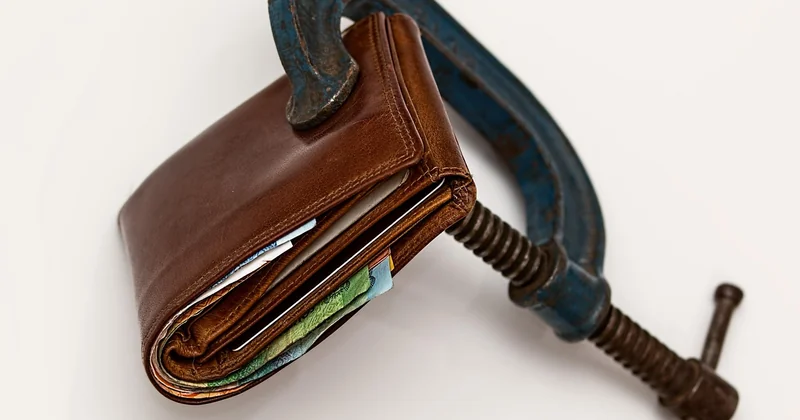
Which of the following is a downside of zero-based budgeting? If I had to pick one, it's this: it is exhausting. And exhaustion is not a minor footnote.
The time cost is real, and it's not small
For my personal finances, a full monthly ZBB cycle took me roughly four to five hours. Every category, every month. That's nearly sixty hours a year spent on budgeting mechanics alone.
For a small business with a dozen cost centers, multiply that. I've seen teams spend entire weeks building zero-based budgets that were obsolete by the second month.
Decision fatigue kills consistency
Here's the trap: the method demands high-quality decisions on every line. Humans are not built to make high-quality decisions on the fortieth line item of the evening.
By month four, I was rubber-stamping. Which defeats the entire purpose. I'd built a system so rigorous that I'd started cheating it just to survive it.
Rigidity versus real life
Life doesn't respect budget periods. A car repair doesn't wait until the next cycle. When your budget is zero-based and tightly assigned, an unexpected expense forces a cascade of reallocation decisions. That cascade is where most people give up.
The hidden cost of tooling
You'll likely need software if you want this to work at any scale. Spreadsheets work — barely — up to maybe fifteen categories. Beyond that, you're looking at paid tools with annual fees that themselves become a line item you have to justify. There's a certain irony there.
What is the 70/20/10 rule money?
The 70/20/10 rule is a simple allocation guideline: 70% of your after-tax income goes to living expenses, 20% to savings, and 10% to debt repayment or investments. It's a framework, not a law. The percentages aren't sacred.
Where it becomes useful is as a sanity check on top of zero-based budgeting. ZBB tells you what each dollar does. The 70/20/10 rule tells you whether your overall distribution looks reasonable.
I ran both together for two quarters. My 20% savings target kept getting eaten by the "living expenses" category, which had quietly drifted to 82%. That's the kind of thing zero-based budgeting surfaces fast — it just doesn't tell you whether the final numbers are sane. The 70/20/10 split does.
A practical combination
Use ZBB to build the budget. Use 70/20/10 to check the result. If your living expenses land above 75% and you're not in an unusually expensive situation, something needs reducing — and your ZBB breakdown will show you exactly where.
Can you give me an example of zero-based budgeting?
Here's the exact structure I used for a single month, on a modest freelance income.
Month income: €4,200
- Rent and utilities: €1,150 — non-negotiable, checked against alternatives each quarter
- Groceries: €420 — based on last month's actuals, not on wishful thinking
- Transport: €180
- Business software and tools: €75 (cut from €165 after the ZBB review)
- Tax reserve: €900 — moved out on payment day, never touched
- Savings: €600
- Health insurance supplement: €110
- Personal spending: €300
- Miscellaneous buffer: €165
- Professional development: €100
- Remaining balance: €200 — assigned to a short-term goal, not left loose
Every line was argued for. The software line dropped by more than half because I finally asked what each tool was doing for me. Two of them were doing nothing.
On the government side of things, the same logic shows up in public-sector budget reviews — agencies defend each program from zero rather than rolling forward last year's appropriations. I've sat in on two such reviews in a municipal context, and the pattern is always the same: the first pass is painful, the second pass reveals savings nobody expected.
What actually happened in month three
I overspent on groceries, cut professional development to zero, and still missed the savings target by €120. The system worked — it showed me the problem in advance. But knowing isn't the same as fixing. That gap between visibility and behavior took me another two months to close.
Who should actually use zero-based budgeting
Not everyone. I'll say that plainly, because most articles won't.
You're a good candidate if your spending has drifted, your income is irregular, or you've recently had a life change that made your old budget obsolete. Freelancers benefit enormously — irregular income makes incremental budgeting nearly useless.
You're a poor candidate if your finances are stable, your costs are predictable, and your time is scarce. A simple automated system will serve you better. Rigor has a cost, and if your spending isn't actually leaking, you're paying that cost for nothing.
The hybrid version that works
After six months of full ZBB, I switched to a hybrid. Fixed categories stay locked for a year. Variable categories get the zero-based treatment each quarter. It costs me maybe ninety minutes per quarter instead of five hours per month, and it catches nearly the same amount of waste.
If you want the benefits without the burnout, that's the version I'd recommend. Run a full zero-based cycle once. Learn what it reveals. Then narrow it down to the categories where waste actually accumulates.
The question I keep coming back to
Zero-based budgeting is a diagnostic tool disguised as a budgeting method. It doesn't make you frugal. It makes you aware. And awareness, once you have it, is difficult to unsee — which is exactly why so many people quit it.
Because once you know that €90 a month is going to software you don't use, or that a quarter of your food budget is delivery fees, you can't pretend you didn't know. The budget didn't change your habits. The knowledge did.
The real question isn't whether zero-based budgeting is worth the effort. It's whether you'd rather keep the effort and lose the blindness, or keep the blindness and save the hours. I've made my choice. You'll have to make yours.