
Inflation is a strange beast. It doesn't announce itself with a bang. It creeps in quietly at the grocery store, at the gas pump, in the rent you negotiate every year. By the time most people notice, it's already eaten a chunk of their savings.
In 2025, I ran a small experiment. I took €10,000 I'd parked in a "safe" savings account paying 1.2% interest. Inflation that year ran somewhere around 3.5%. At the end of twelve months, my balance had grown by €120. But my purchasing power had dropped by roughly €230. I was celebrating a gain while quietly losing ground. That's how inflation works — it doesn't take your money. It just makes your money worth less.
So what actually causes inflation, and how does it silently erode your savings? Let's break it down properly.
Key Takeaways
- Inflation is caused by demand outpacing supply, rising production costs, and expectations that prices will keep climbing.
- Cash and low-yield savings accounts lose real value when inflation outruns their interest rate.
- Taxes on interest and capital gains amplify the damage — you can pay tax on gains that don't even keep pace with inflation.
- Borrowers with fixed-rate debt often benefit from inflation; savers with cash typically don't.
- Protecting savings requires real assets, inflation-adjusted instruments, and a clear-eyed look at fees.
- The worst investments during inflation are long-term bonds, cash under the mattress, and anything paying a fixed nominal return below the inflation rate.
What causes inflation — and why it never comes from just one place
You'll often hear inflation explained as "too much money chasing too few goods." That's true, but it's incomplete. In practice, inflation emerges from several forces interacting at once.
Demand-pull inflation: when spending outruns supply
When consumers, businesses, and governments all spend aggressively at the same time, demand outpaces what producers can deliver. Prices rise. This happened in 2021 and 2022 when pandemic savings flooded back into the economy just as supply chains were still tangled. Factories couldn't keep up. Shipping costs tripled on some routes. Suddenly, a sofa that cost €800 was listed at €1,100.
Central banks respond by raising interest rates to cool borrowing and spending. But this takes months to work through the system — and by then, the damage to your savings is already done.
Cost-push inflation: when inputs get more expensive
Energy is the classic example. When oil prices spike, everything that moves — food, clothing, electronics — gets more expensive to transport. In 2022, European natural gas prices surged following supply disruptions, and within months, fertilizer costs doubled. Farmers passed those costs on. Bread, pasta, and dairy all climbed.
Wages follow. Workers demand higher pay to cover rising living costs. Companies raise prices again to protect margins. This is the wage-price spiral — and it's one of the hardest cycles to break.
Built-in inflation: when expectations become reality
Here's the part most explanations skip: inflation becomes self-fulfilling. If businesses expect 4% inflation next year, they price accordingly. If workers expect it, they negotiate raises in advance. The expectation itself becomes a cause.
Central banks know this. That's why they fight inflation with communication as much as with interest rates. If they can convince markets that inflation will return to 2%, the expectation loosens its grip.
How does inflation impact savings?
Directly, quietly, and often more severely than people realise. Let's use numbers.
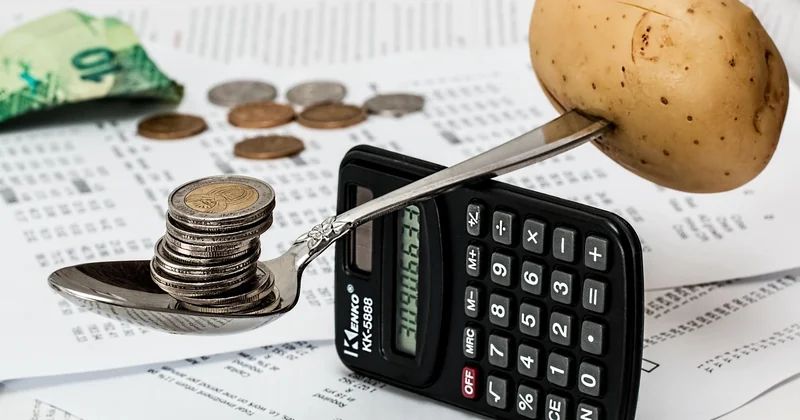
Say you have €50,000 in a savings account earning 2% annually. Inflation is running at 4%. Your nominal return is €1,000. But the real return — what you can actually buy with that money — is negative. After inflation, your €51,000 is worth about €49,038 in purchasing power terms. You "earned" interest and still lost €962.
Now add tax. In many European countries, interest income is taxed at 25% to 30%. On your €1,000 gain, you might pay €300 in tax. Your after-tax, after-inflation return is now deeply negative. You paid tax on a gain that didn't even cover inflation.
| Scenario | Nominal balance after 1 year | Tax paid (25%) | Real purchasing power (4% inflation) | Net loss |
|---|---|---|---|---|
| €50,000 at 2% interest | €51,000 | €250 | €49,038 | -€962 |
| €50,000 at 4% interest | €52,000 | €500 | €50,000 | €0 |
| €50,000 at 1% interest | €50,500 | €125 | €48,558 | -€1,442 |
| €50,000 in cash | €50,000 | €0 | €48,077 | -€1,923 |
The table tells a blunt story: unless your savings rate beats inflation after tax, you're losing money. Full stop.
The tax trap nobody warns you about
This is the angle most articles miss. Taxes are calculated on nominal gains, not real gains. If inflation is 4% and your investment returns 5%, you're taxed on the full 5% — even though only 1% is a real gain. In a high-inflation environment, this tax treatment can turn a modest real return into a real loss.
I learned this the hard way in 2022. I had a bond fund that returned 3.8% nominal. After tax and inflation, my real return was negative 1.2%. I'd have been better off in an inflation-linked savings product paying 0.5% — at least there, the principal was indexed to inflation.
Who gets richer during inflation?
Borrowers with fixed-rate debt. If you locked in a 3% mortgage before inflation hit 5%, you're paying back your loan with money that's worth less than when you borrowed it. Your debt shrinks in real terms. Your lender takes the hit.
Governments benefit too. Sovereign debt is typically fixed-rate. Inflation erodes the real value of what they owe. Asset owners — real estate, commodities, equities — often see their holdings rise nominally, even if the real gain is modest.
Savers holding cash get squeezed. This is the transfer mechanism: inflation moves wealth from creditors to debtors, from cash holders to asset holders.
What are the 10 worst investments to have during inflation?
Not all assets respond equally. Some actively bleed value when prices rise. Here's my list, based on what I've seen work and fail in practice.

- Long-term government bonds with fixed coupons. A 10-year bond paying 2% is a disaster when inflation runs at 4%. The market reprices it downward, and you're locked into a losing real return.
- Cash in a current account. Zero interest, full inflation exposure. The worst possible container for long-term savings.
- Low-yield savings accounts. Anything paying below the inflation rate after tax is a slow-motion loss.
- Corporate bonds with weak pricing power. Companies that can't raise prices get squeezed, and their credit quality deteriorates.
- Annuities with fixed payouts. A fixed pension payment that looked generous in 2020 looks meagre in 2026.
- Growth stocks with no earnings. When rates rise to fight inflation, future earnings get discounted more heavily. These stocks often fall hardest.
- Real estate in oversupplied markets. Property is often cited as an inflation hedge, but if rents can't rise — due to rent control or weak demand — the hedge breaks.
- Commodity ETFs with high roll costs. You can be right on the commodity and still lose money on the structure.
- Fixed-rate deposits locked for 5+ years. You've locked in a rate that may be below inflation for years.
- Any investment with high fees and low transparency. Fees compound against you exactly like inflation does.
The pattern? Anything with a fixed nominal return, low pricing power, or high structural costs tends to lose.
How do I protect my savings from inflation?
There's no single answer, but there are layers. Here's what I'd prioritise if I were starting from scratch today.
1. Know your real return — not your nominal one
Real return = nominal return minus inflation minus tax. If that number is negative, the investment is losing you money regardless of what the statement says. I check this quarterly now. It changed how I allocate everything.
2. Use inflation-linked instruments where available
Many countries offer inflation-linked savings bonds or certificates. The principal adjusts with the inflation index. The returns are modest, but they're predictable and often tax-advantaged. For the portion of your savings you can't afford to lose, these are worth considering.
3. Hold real assets with pricing power
Real estate, commodities, and equities in sectors that can pass costs to customers. Not all real estate is equal — I'd favour markets with supply constraints and strong rental demand. Not all commodities either; I'd avoid anything with punishing roll costs.
4. Shorten bond duration
If you hold bonds, shorter maturities are less sensitive to rate changes. A 2-year bond repriced faster than a 10-year. In inflationary periods, flexibility matters more than yield.
5. Pay down variable-rate debt first
If you have credit card debt or a variable-rate loan, inflation makes it worse — central banks raise rates, and your payments climb. Eliminating that debt is a guaranteed real return.
6. Watch fees like a hawk
A 1.5% fund fee in a 2% return environment is devastating. Fees, like inflation, compound silently. I moved from actively managed funds to low-cost index products three years ago and cut my average fee from 1.4% to 0.2%. That difference, compounded over a decade, is enormous.
The number that matters isn't on your statement
Your bank statement shows nominal euros. It doesn't show what those euros can buy. That gap — between the number and its purchasing power — is where inflation does its work. It's invisible, gradual, and relentless.
The people who weather inflation best aren't the ones who predict it. They're the ones who build a portfolio where real returns are positive after tax, who avoid locking money into fixed-rate instruments below the inflation rate, and who check the math regularly instead of trusting the headline balance.
So the question worth sitting with isn't "what's my return?" It's "what can my return actually buy?" If the answer is less than last year, you already know what you're up against.